Onboarding to a Microservices Architecture Without an Engineering Background
Learn which services exist, what they own, and when to ask for help.
Onboarding to a microservices environment without an engineering background is a problem of orientation, not technical skill: knowing which services exist, what each one owns, and how to find answers without pulling an engineer off their work. The fastest path there runs through three habits: building a service map, learning to query the codebase in plain language, and knowing when self-service stops working and an engineer is genuinely required. None of this demands an understanding of distributed systems theory.
Why microservices environments are genuinely disorienting for non-engineers
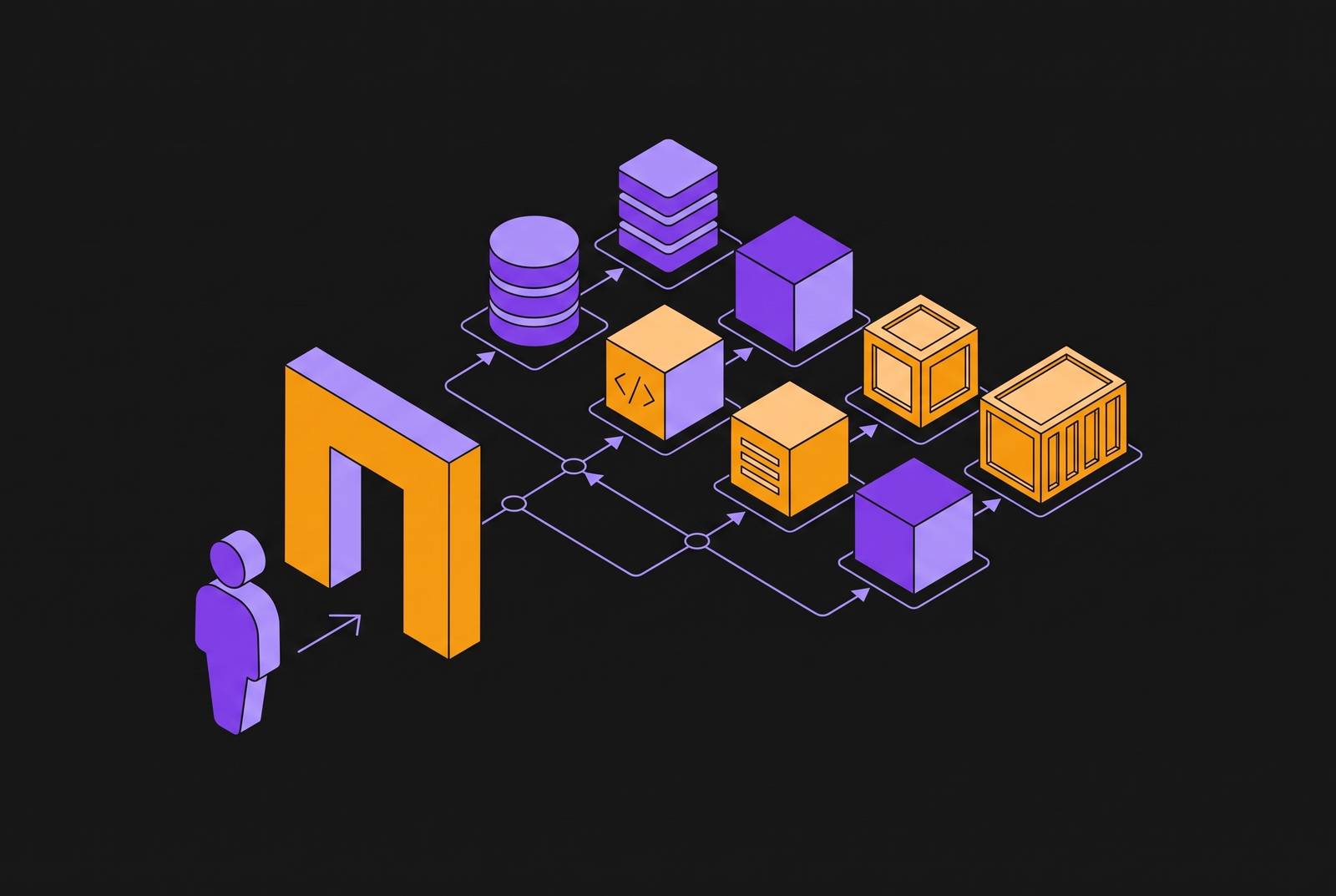
A microservices codebase has no front-to-back reading order. It is dozens or hundreds of independent services, each owning a slice of the business, each with its own repository, its own data store, and its own deployment pipeline, all communicating over a network. A monolith keeps its complexity inside the code itself, where at least it is in one place. Microservices move that complexity out into infrastructure, service boundaries, and organizational structure, and that relocation is what makes the environment hard to navigate for someone without an engineering map to follow.
Each service is built around a specific business capability and can be developed, deployed, and scaled on its own, which sounds like a convenience until a newcomer tries to understand a single feature and finds it requires reading across several repositories, in different languages, following different conventions. In 2026, the conversation inside engineering organizations has shifted from whether to break systems into small services toward how to design those services so scalability, simplicity, and operational efficiency stay balanced. For a non-engineer, the services are already there regardless. They are an inherited fact of the organization, not a decision anyone handed to them, and the first real question is never "how do I write code." It's "what even exists here, and who owns what."
Uber's engineering organization addressed this same disorientation by grouping its services into domains, making the landscape legible at a glance rather than leaving newcomers to infer structure from hundreds of unrelated repository names. The organization of services turned out to be an onboarding tool in its own right, not an incidental technical detail.
What non-engineers need to function in a microservices environment
The functional requirements here are narrower than the scale of a microservices org suggests. A non-engineer needs to know which services exist, what each one owns, and how to find answers without interrupting engineers to get them. That's the entire scope of the problem, and it is achievable.
A product manager approving a feature, a support agent tracing a customer-reported bug, and a new hire working their first ticket are all solving the same underlying problem of orientation, even though their day-to-day work looks nothing alike. Services talk to each other over a network through APIs or message queues, and each typically carries its own codebase and its own database, so "where does this live" is a legitimate, non-obvious question, one that even experienced engineers face when they join a new organization. That should be reassuring: the disorientation isn't a sign of a knowledge gap unique to non-engineers, it's a structural feature of the architecture itself.
Three skills close that gap. The first is service mapping: building a working mental model of which services exist and what each one is responsible for. The second is plain-language querying: getting answers out of the codebase without reading raw code. The third is escalation judgment: telling apart the questions that are genuinely unanswerable without an engineer from the ones that just feel that way at first. Each of the next sections builds one of these skills in order.
Building a service map as your first orientation move
Before querying anything, a non-engineer needs a rough map: which services exist, what business capability each one owns, and roughly how they relate to one another. The map doesn't need to be exhaustive or technically precise to be useful. A working list of service names, their owners, and their primary responsibility is enough to make most day-to-day questions answerable.
Each service tends to own a specific, nameable slice of the business: payments, user profiles, notifications, search. That means the fastest way to locate the right service for a question is through the business vocabulary people already use, not through code-level terminology a non-engineer hasn't learned yet. Four sources build this map without requiring any engineering background: internal wikis or Confluence pages that document service ownership, Jira or Linear projects that often map directly onto services or domains, README files at the root of each repository (which typically describe what the service is for), and a single focused conversation with one engineer. Asking "what are the ten most important services and what does each one own" in one sitting is a high-value, low-interruption way to get oriented, far better than a trickle of small questions spread across weeks.
The map that results from this work is a personal reference, something that turns a future question into something answerable without a trip back to engineering. Uber's domain-grouping approach is this same move at organizational scale: grouping services by business domain so that orientation becomes possible at a glance.
Querying a codebase in plain language without reading raw code
Once the map exists, the next skill is extracting answers from the codebase itself without reading raw code line by line. AI coding agents and code intelligence tools have made this realistic for non-engineers.
Context, not just the underlying model, is what makes a query reliable. An AI assistant that can see the relevant code, the right repositories, the right files, the right service boundaries, grounds its answers in what the codebase actually does rather than in a plausible-sounding theory of what it should do. AI agents can act as interactive guides inside a codebase, helping someone understand the architecture, locate specific logic, and get oriented by answering contextual questions directly, which is exactly the category of question that otherwise turns into an interrupt-driven message to a senior engineer. Most coding agents, by default, only see the code sitting on a single developer's local machine. That default is the failure mode for a non-engineer: a question like "which service handles payment retries" returns a guess, not an answer, if the agent can't search across the whole organization's repositories.
Sourcebot is built to close that gap. It gives AI agents context across every repository in an organization, so a question like "how long would it take to migrate us from one SDK to another" gets grounded in a search across all relevant files. Through its Ask Sourcebot interface, a non-engineer can run that kind of query in plain language, without writing code or manually digging through repositories.
A small set of query patterns covers most non-engineer needs. "Which service owns [feature name]?" orients to the right codebase to begin with. "What does [service name] do and what does it depend on?" builds out domain understanding beyond a single feature. "Where is [business concept, such as refund logic] handled?" finds relevant code without requiring any knowledge of file structure. "What changed in [service] recently?" is particularly useful in support and PM contexts, where the question is often about a regression or a recent release.
The hallucination risk deserves to be named directly: an AI assistant describing a microservices architecture can produce answers mixing accurate detail with descriptions of how the system is supposed to work, which may diverge from how it actually behaves. Grounding the agent in the real codebase, not just documentation describing it, is the best available mitigation, because context across every repository shapes the accuracy of the answer more than which model happens to sit underneath the query.
Connecting external tools like Jira and Confluence to codebase queries
Non-engineers already hold rich context about their work inside the tools they use daily: Jira tickets, Confluence pages, Linear projects. What's missing is the connection from that context to the actual codebase, and MCP-based connectors are what bridge the two.
The Model Context Protocol is an open standard for connecting AI assistants to the systems where an organization's data actually lives, spanning content repositories, business tools, and development environments. Indexed MCP servers across registries exceeded 100,000 combined listings by mid-2026, and that standard is what lets a single query span both a Jira ticket and the code it refers to in one answer. A product manager asking "what work has been done on the checkout service this sprint" can get a response that draws on both the project tool (what was planned) and the codebase itself (what actually changed), without needing an engineer to manually reconcile the two.
Sourcebot's connectors run over MCP and link external tools like Linear or Jira so an agent can pull in context beyond code and even take action, such as creating a Linear project directly from a query. Those connectors run under the user's own permissions and keys, so a non-engineer only ever sees what they're already authorized to see. Connecting project tools to codebase queries doesn't mean handing everyone read access to everything. The permissions layer underneath the connection determines who can see what, which is what makes that breadth of access safe to grant.
When to self-serve versus escalate to an engineer
Building a service map and learning to query the codebase is about routing the right questions to the right source, and knowing where that line sits is its own skill, one worth practicing deliberately.
Some questions are reliably self-serviceable once the map and the query tool are in place: which service owns a given feature or business capability, what a service does and what it depends on, what recently changed in a service, whether a bug report touches a known area of the codebase, and what the current state of a ticket or project looks like relative to the code. Other questions genuinely require an engineer. Why a system was designed a particular way draws on historical context and trade-offs that were never written into the code or the docs. Whether a proposed change is safe to make requires architectural judgment that no query tool can substitute for. Diagnosing a live production incident requires operational context, telemetry, and system access that sit outside what a non-engineer's tools can reach.
The productivity case for giving non-engineers good tools depends on a kind of discipline that runs in both directions: trusting the tools enough to use them before escalating, and trusting the boundary enough to escalate once a question crosses it. A workable heuristic covers most cases: if the question is about what exists or what happened, self-serve. If the question is about what should happen next or whether something is safe, escalate. Most non-engineers, once they start applying this heuristic, find the self-serve category considerably larger than they assumed walking in.
Self-hosted code intelligence for protecting sensitive codebases when non-engineers have access
Giving non-engineers access to codebase queries is only workable if the organization can guarantee that sensitive code stays inside its own infrastructure, and self-hosted tools are what make that guarantee possible. Cloud-hosted code intelligence tools require sending code to an external service to begin with, and the widest gap between free and paid tiers at many SaaS vendors is in data handling: some retain or train on code submitted at lower tiers.
Sourcebot deploys as a Docker Compose stack, a Sourcebot container alongside Postgres and Redis containers, inside a company's own infrastructure, so sensitive code never leaves the customer's environment. Connectors to external tools like Jira, Linear, and Notion run with the user's own keys and permissions, keeping that same boundary intact across every integration. Teams also retain the choice of LLM provider under this model, because the model layer is decoupled from the code storage and search layer, a bring-your-own-model arrangement that keeps control over where code gets sent with the organization, not a vendor's default settings.
For enterprises with data residency or compliance obligations, self-hosting is the only deployment model that satisfies those requirements while still giving non-engineers the access they need to do their jobs. Sourcebot's Pro plan, priced at $20 per user per month, adds SSO, audit logs, permission syncing, and organization management on top of the self-hosted deployment, letting an organization extend broad access to non-engineers while keeping precise control over who can see what.
A concrete starting sequence for a non-engineer's first two weeks
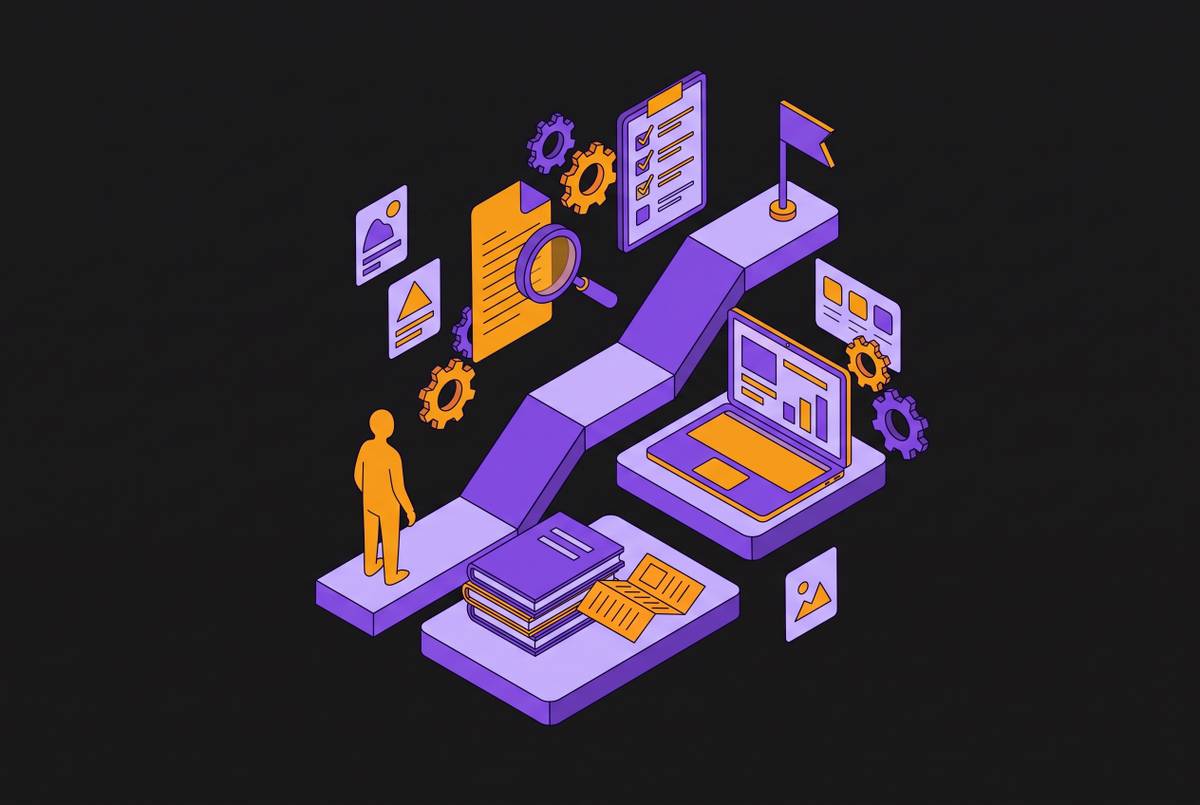
The three skills, service mapping, plain-language querying, and escalation judgment, build on each other in a specific order. A non-engineer who works through them in sequence can reach functional codebase orientation within two weeks, without needing sustained engineering support to get there.
Building a rough service map occupies days one through three: reading README files for the five to ten services most relevant to the role, holding one focused orientation session with an engineer to establish the ten most important services and what each owns, and mapping those services onto the Jira or Linear projects already part of the daily workflow. Days four through seven go toward learning to query: setting up access to the organization's code intelligence tool (if it's Sourcebot, the free Basic plan deploys in minutes with npx setup-sourcebot and indexes real repositories immediately), then practicing the four query patterns against real questions pulled from an actual backlog. Days eight through fourteen go toward escalation judgment: attempting to answer each question with the service map and the query tool before asking an engineer, and when escalation is genuinely necessary, noting what made the question unanswerable through self-service, since that observation sharpens the boundary over time.
The case for building these habits mirrors the engineering team's own workload: every question a product manager or support agent answers without help is an interruption a senior engineer never has to field. That benefit compounds as more non-engineers across an organization develop the same capability, which makes codebase orientation for non-engineers less a personal efficiency habit and more a structural lever for how the whole engineering organization spends its attention.