Using Code Evidence to Resolve Feature Specification Disputes
Code evidence resolves feature disputes faster than stale documents.
Feature specification disputes become easier to resolve when teams separate what the system does from what it should do. When written specifications drift, code evidence is the most reliable record of what the system does. Giving teams access to that evidence lets them settle the facts, interrupt senior engineers less often, and decide scope without waiting for someone to fix a document.
Why written specifications stop being reliable once implementation begins
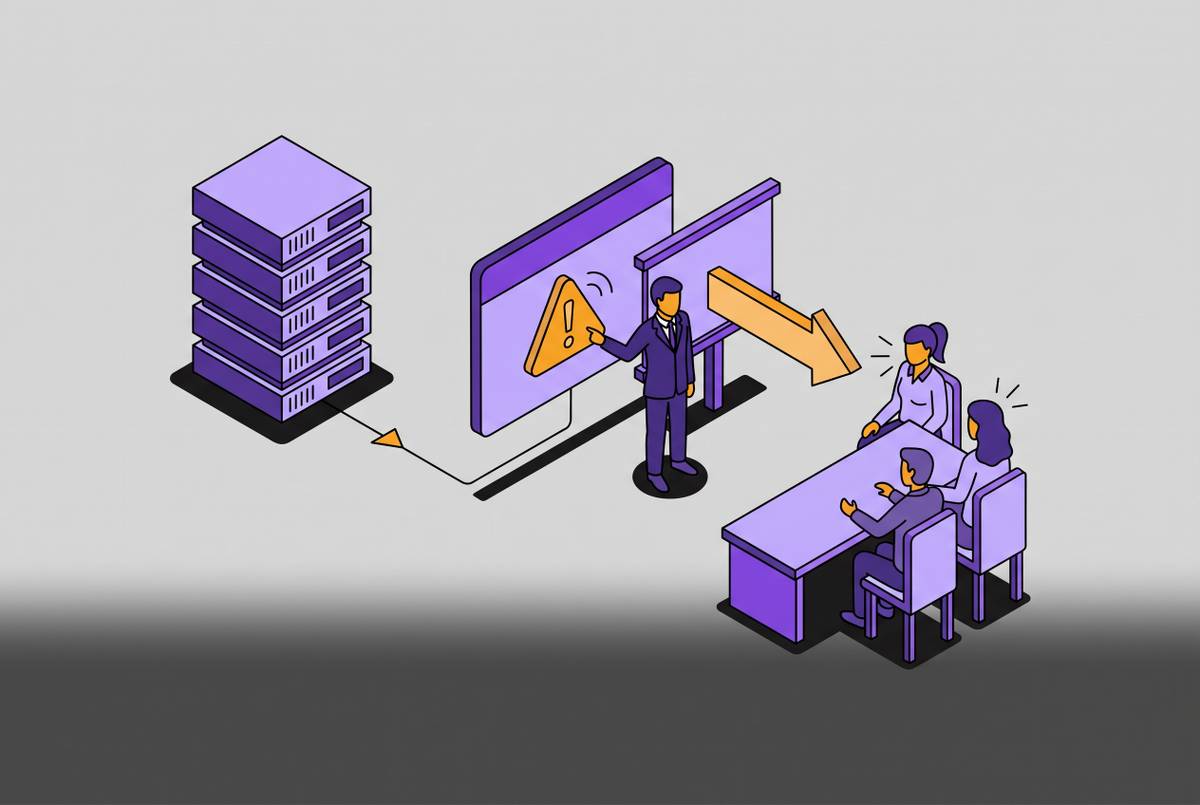
A developer encounters an undefined eligibility rule, but product needs an answer from operations before implementation can continue. That answer settles one question while a missing UX state raises another. Engineering then discovers that the requested behavior conflicts with the existing data model. Each discovery produces a decision, but those decisions rarely travel back to the specification. The gap is a structural property of software delivery.
A requirement can therefore be detailed and still rest on a false assumption. If the system stores only the current balance and historical transaction data is incomplete before an earlier migration, more documentation cannot supply the missing data. The constraint becomes visible only when someone examines the implementation. As these discoveries compound across sprints, the specification becomes a historical artifact that no longer reliably describes the build. By the second release, a disagreement about the feature can become a dispute over which record deserves trust.
What is actually at stake when a dispute stalls on a stale document
The immediate cost is an interruption chain. Someone encounters an ambiguity, finds the person most likely to understand it, pulls that person out of context, and waits for an explanation. The interrupted engineer then has to recover concentration after the conversation ends. Across a working day, these interruptions can consume a meaningful share of engineering time before the underlying disputes are resolved.
New engineers and non-engineers have a harder time because they lack the codebase context to find answers on their own. Each unanswered question becomes another escalation to someone senior, making the same people both the source of knowledge and the bottleneck in accessing it. When AI coding agents lack the relevant codebase context, they can produce output that looks right but rests on the same hidden assumptions that made the specification hard to trust. The useful alternative is a dispute in which the evidence is already surfaced, so the conversation can begin with the decision rather than the search for someone who knows the facts.
How code becomes the authoritative record when documents cannot be trusted
When documents drift and memories differ, code records what was built. It shows what a decision became in the system. This makes it the authoritative record for questions about existing behavior, rather than an authority on what the product ought to do. That distinction gives code evidence its value in a dispute.
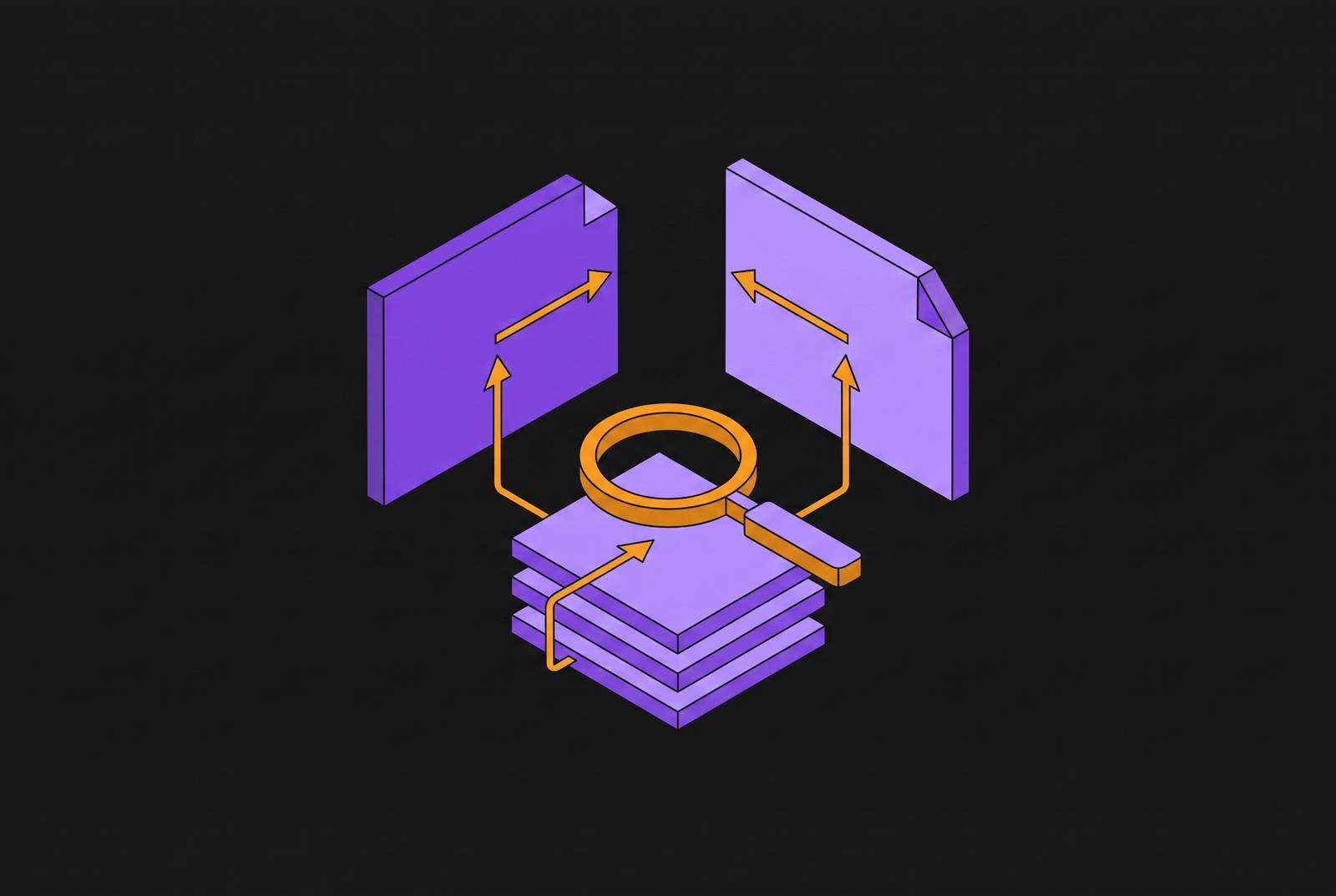
Code evidence means structured, queryable facts about the implementation. Those facts include which services consume a field, which repositories call an RPC, and which branches depend on a flag. They answer specific questions without requiring the person investigating to know where to look beforehand. A discussion about whether a feature exists or which services depend on a contract can then rest on inspectable relationships.
The strongest objection is that code can implement a bug. That objection limits what the evidence proves, but does not weaken its account of what is implemented. Evidence can establish a behavior and its dependencies without establishing whether the behavior was intentional. Judgment is still required to decide whether to preserve or change it. Code evidence settles the facts so that argument no longer gets in the way of that judgment.
What surfacing code evidence looks like in a real dispute
A dispute in a ticket or meeting often contains three competing accounts, namely the written specification, product’s recollection, and engineering’s implementation. Instead of polling people for their memories, someone queries the methods that call the disputed API. The investigation then follows the flag controlling the behavior and the upstream and downstream call chains. This brings the implementation into the discussion as evidence that all parties can examine and use as a shared starting point for deciding what happens next.
Research published on arxiv.org in February 2025 described an enterprise software team that used a Gherkin scenario as the authority when disputes arose over what “done” meant. If the scenario was wrong, the team updated it with explicit stakeholder agreement. If the code was wrong, developers fixed it. This BDD case eliminated the ambiguity that had caused rework and conflict by making the disagreement resolvable against an agreed record. The record used to settle a dispute must be close enough to implementation to expose the mismatch.
That pattern depends on separating the evidence of a mismatch from the agreement about how to resolve it. Tooling becomes important when finding and explaining that evidence exceeds what a person can do quickly.
Why scale breaks the manual approach to surfacing code evidence
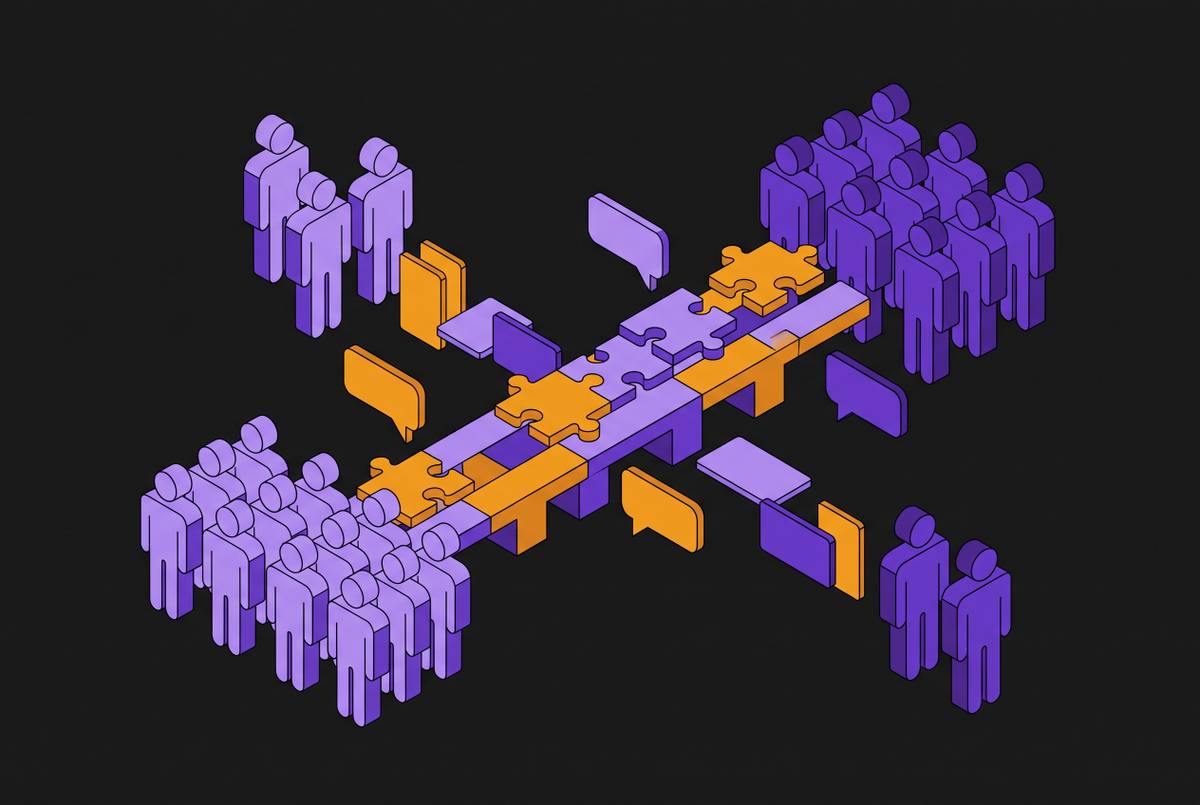
In a small codebase, a senior engineer may answer a behavior question from memory or a short grep. In a large, multi-repository system, specialists each know part of how it works, and only some of that knowledge is written down. Finding the answer then requires the same interrupt chain that code evidence is supposed to shorten. More repositories can mean more people to consult before the dispute has a shared factual foundation. Human translation becomes the constraint even when the facts are present in the code.
The ACM survey Big Code Search: A Bibliography identifies code search as one of the most frequent activities in software development. It also notes that existing studies generally explore narrow and limited subsets of used components. Organization-wide evidence nevertheless requires deliberate infrastructure rather than reliance on ad hoc queries and personal knowledge. AI agents face the same constraint when they cannot see across repositories or access the call graphs needed to understand a disputed behavior. The infrastructure must make those relationships available before either a person or an agent can reason over them.
The infrastructure that makes cross-codebase evidence queryable
A practical architecture separates discovering facts from reasoning about them. Static analysis discovers code relationships deterministically, AI reasons over those relationships, and a delivery protocol such as MCP makes them available to agents and tools. Call-graph analysis can identify methods that call an experiment API, branches that depend on a flag, and the blast radius of a contract change. Unlike a written account, this evidence can change as the code changes.
Code relationships do not, however, explain every decision. Enterprise search infrastructure that indexes tickets, PRs, runbooks, and Confluence together with code can supply the surrounding history. A Slack thread may hold the decision, while a ticket records why scope changed. These sources complement the implementation rather than override it, because reasons and outcomes answer different questions. GitHub’s enterprise-level code search qualifier, now generally available for GitHub Enterprise Cloud customers, also shows the need to find evidence across organizations without having to search each one on its own.
That breadth of access makes deployment a security decision. Infrastructure that queries the full codebase must be allowed to access the full codebase. For enterprises whose security rules require code to stay inside their network, self-hosted deployment is required even if they would prefer to host it elsewhere. The architecture succeeds when an authorized person can answer the disputed question without interrupting a senior engineer or moving code outside the permitted boundary.
How to run a spec dispute resolution using code evidence
The method begins by turning disagreement into a precise claim. “The feature is broken” is too broad to investigate, while a statement that the specification requires one behavior and the build performs another identifies the mismatch. This translation is often the hardest part because disputes arrive as interpersonal friction. A disagreement between product and engineering becomes tractable when it is expressed as whether field Z is used by service W. That formulation identifies the evidence needed without deciding in advance which party is correct.
The next move is to query for that specific fact. The relevant evidence will usually concern call graphs, flag dependencies, data flow, or API surface, rather than code style or a broad architectural judgment. Participants can then choose between correcting the specification and changing the implementation. The method keeps the factual investigation separate from the scope decision it supports.
GitHub’s Spec Kit, introduced in 2025, formalizes a specification-to-plan-to-tasks-to-implementation-to-convergence workflow. Its handoff points offer a reference for making evidence checks repeatable. Amazon’s Kiro, a spec-driven IDE built on Anthropic’s Claude, similarly breaks stated intent into requirements, design, and tasks. Both point toward keeping specifications closer to implementation and continuing to work on the document after coding begins. The dispute-resolution method works regardless of tooling sophistication, but tooling determines how quickly it works and how many people can participate.
Who in the organization benefits when code evidence is accessible to non-engineers
Product managers, QA specialists, new hires, and support staff already participate in disagreements about behavior, but often depend on engineers to translate the implementation. When a product manager can establish whether a feature described in a ticket exists in the current build, they bring that evidence to engineering.
New engineers benefit from the same capability because much of onboarding consists of gathering context. Their questions about how a feature works have the same structure as the questions raised by a specification dispute. Support staff and QA teams also gain a clearer basis for escalation when they can distinguish an absent behavior from a documented expectation. That distinction supports better-scoped bug reports and less back-and-forth about what the report actually describes.
The value therefore extends beyond developer productivity. The same index can support a product manager’s scope question, a new hire’s investigation, and a support agent’s assessment of a customer report. Faster dispute resolution is one consequence of that wider access.
What an engineering team needs to make code evidence part of how disputes get resolved
The first requirement is index coverage. A platform cannot produce evidence from a repository it cannot see, so cross-repository and cross-organization search scope are hard requirements. Speed matters for the same practical reason. If gathering evidence takes longer than asking a senior engineer, people will continue to ask the engineer. The evidence path has to be fast enough to become the easier path.
Access must also follow the codebase’s permission model. Even when the index covers the whole codebase, permission-aware retrieval is needed to return only the results each user is allowed to see. For regulated industries and proprietary codebases that must remain inside the network, self-hosting preserves that security boundary while allowing full-codebase access. A natural-language interface then lets people outside engineering use the evidence, and an answer based on the retrieved code lets them check what it rests on. MCP or an equivalent API extends that access to agents without requiring a human intermediary.
Engineering leaders and platform teams should judge how these capabilities work as one system as well as how each feature works on its own. Evidence can reach the people who need it only when coverage, permissions, deployment, querying, and integration meet the organization’s constraints. Self-hosted code intelligence is the appropriate infrastructure category where full-codebase access and an internal security boundary must coexist. Teams spend less time disputing existing behavior, senior engineers receive fewer interruptions, and scope decisions move faster because the argument concerns what to do.