Understanding Monorepo Structure for Non-Engineers
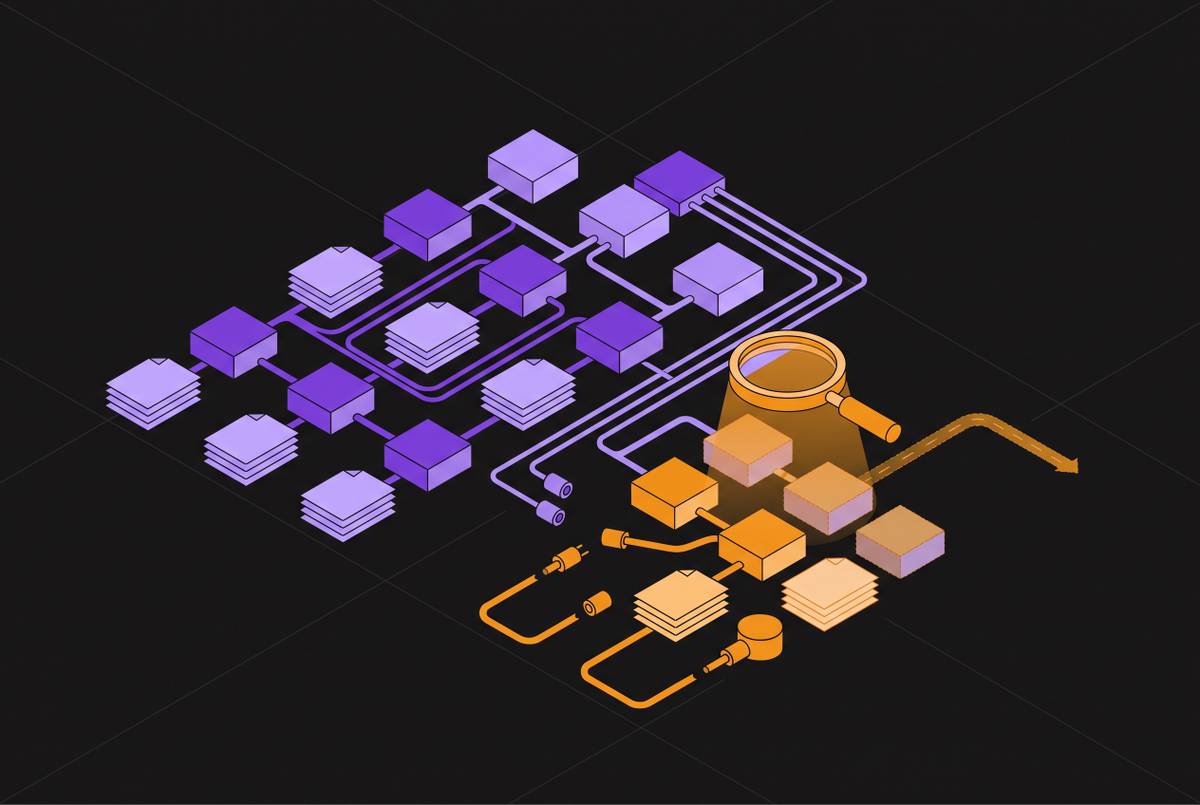
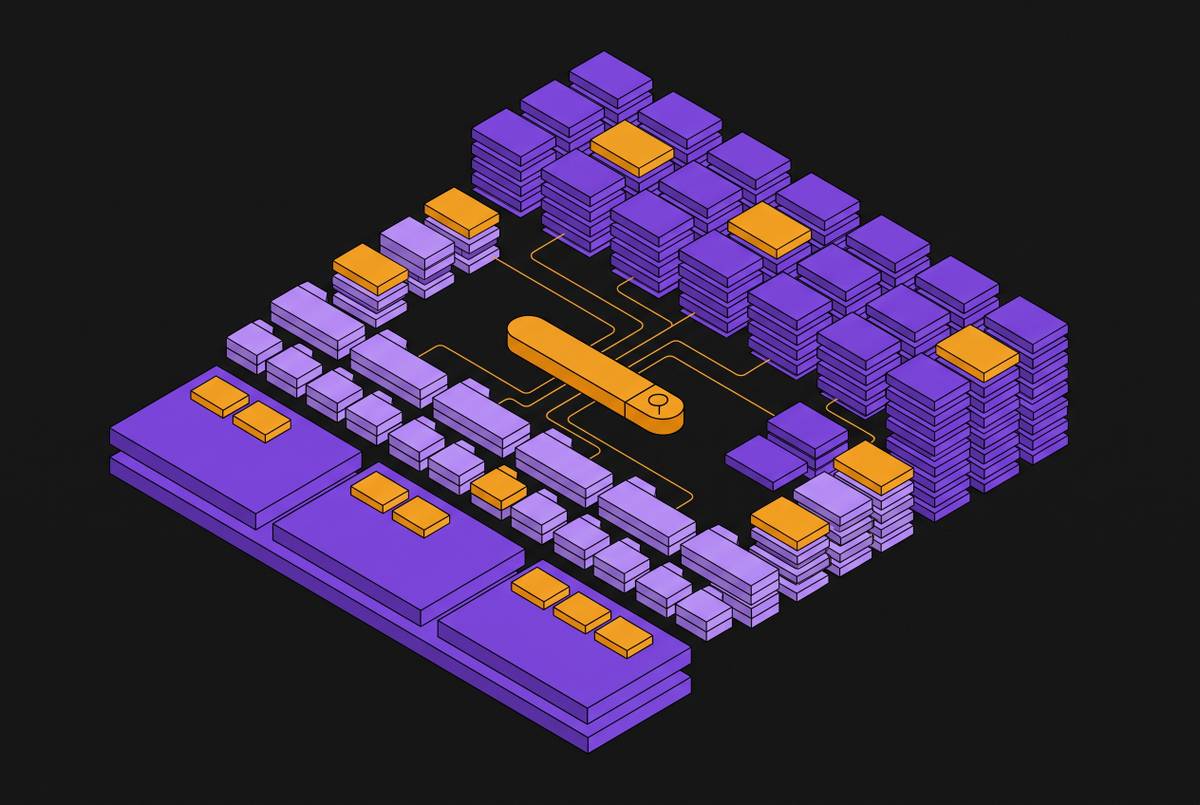
A monorepo unifies shared infrastructure while keeping projects independently deployable and owned.

A monorepo is a version-control decision, not an architectural one. Non-engineers tend to get that single distinction wrong more than any other, so it should be cleared up before anything else. The word "mono" suggests one thing, singular and undivided, which leads people to assume a monorepo means one giant, tangled codebase. A monorepo does not mean one giant, tangled codebase. A monorepo is a single repository that holds multiple distinct projects, each with its own build, its own tests, and often its own team, but sharing one commit history, one install process, and one continuous integration pipeline. What's unified is the plumbing. What stays separate is the work itself.
Confusing this with a monolith is the most common mistake, and it's not a small one. A monolith is a single application deployed as one unit: change one part, redeploy the whole thing. A monorepo can hold a dozen independently deployable services that never touch each other in production, all living under the same roof in version control. The opposite of a monorepo is a polyrepo, sometimes called a multi-repo, where every project gets its own separate repository. Companies operating at serious scale, Google, Meta, Microsoft among them, run enormous monorepos; Google's is reported to exceed 80 terabytes. None of that changes the basic definition. What matters for a PM, a support lead, or a new hire trying to make sense of a codebase is simpler than the scale numbers suggest: know what's shared, know what's isolated, and the rest of the structure becomes readable.
The coordination problem that monorepos are built to solve
Picture the polyrepo version of a mid-size engineering org: multiple separate repositories, each with its own package.json specifying slightly different versions of the same dependency, and duplicated utility functions that started identical and have since drifted apart in ways nobody tracked. Shipping one feature means touching several of those repos and coordinating separate CI pipelines to make sure none of them break in isolation while working together in production.
That overhead has a name: coordination cost. It's the tax an organization pays for keeping related projects physically separated. Drift appears in predictable ways. Different teams end up on different versions of the same library, sometimes for years, because nobody owns the job of syncing them. Duplicated code diverges silently, so a bug fixed in one copy stays broken in the other three. And a change to a shared API, something as routine as adding a required field, turns into a coordinated pull request campaign across every repo that consumes it.
A monorepo attacks this directly. Because everything lives under one commit history, a single atomic commit can update an API and every one of its consumers at the same time. No waiting on separate teams to merge separate code changes in the right order. That's the trade the monorepo makes: it reduces integration cost, but it demands discipline in return. Boundaries, a sane CI strategy, and clear ownership don't happen automatically just because the folders sit next to each other. If that discipline is skipped, the monorepo doesn't remove the coordination cost; it just relocates it. The instinct is to treat repo structure as a technical footnote. The choice of repo strategy is not a technical footnote. The choice of repo strategy is really a decision about how teams are meant to work together, made visible in how the code is stored.
The physical layout of a monorepo and the reasons for its folder structure
When the code itself is stripped away, a typical monorepo's folder structure is almost boring in its logic. An apps/ folder holds the things that actually get deployed: the web app, the API server, an admin dashboard, maybe a mobile client. A packages/ folder holds shared internal libraries: a shared UI component set, common utility functions, shared TypeScript type definitions, shared configuration files. Often there's a tooling/ or configs/ folder carrying the linting rules, build presets, and test setups that every project in the repo is expected to use. And at the root, one package.json and one lockfile govern dependency versions for the entire repo, rather than nine slightly different ones scattered across nine separate projects.
The rule that gives this structure its shape is directional: apps/ can depend on packages/, and packages/ can depend on other packages/, but nothing is allowed to flow the other way. A shared library never reaches back into a specific application to grab something it needs. That one-way flow is the dependency graph, made physical in the folder layout.
Think of packages/ as the organization's shared pantry, and apps/ as the dishes coming out of the kitchen. Every dish draws its ingredients from the same pantry instead of each team maintaining a private stash of flour and sugar that nobody else can check the freshness of. Because the pantry is shared, code style, dependency policy, and documentation standards get defined once, in one place, and apply everywhere by default, rather than existing as an aspiration each team interprets on its own. Some teams organize their shared component pantry using Atomic Design, arranging pieces from atoms up through molecules, organisms, and larger compositions, smallest building blocks first. It's an optional pattern, common enough to recognize by name.
"Packages" and "boundaries," and why they matter more than the folder names
A package, in this context, is a self-contained unit with its own name, its own version number, and its own public interface. Other packages can only use what that package explicitly chooses to export. Everything else stays private, invisible to the rest of the repo no matter how convenient it might be to reach in and grab it directly.
That exported surface is the package's public API, and it's the actual enforcement mechanism behind the whole idea of modularity. What a package exposes is a deliberate choice; what it hides internally simply isn't available, full stop. Boundaries are the rules governing which packages are allowed to depend on which others, and critically, these aren't just conventions written in a wiki page that people are supposed to remember. Tooling can enforce them automatically, rejecting a build the moment someone violates the rule.
For a non-engineer, boundaries matter for three concrete reasons. They tend to map onto team ownership, so a boundary line is often also the line that answers "whose problem is this." They determine blast radius: a change made inside a properly bounded package only affects the packages that explicitly, deliberately depend on it, nothing else. And they make the question "who owns this?" answerable at all, rather than a mystery requiring a scattered chat thread and three people who each think it's someone else's.
When boundaries are absent, the failure modes are specific and ugly. Circular dependencies creep in when Package A depends on Package B which depends back on Package A, turning the graph into a loop that won't build cleanly. Code that works fine on one engineer's laptop breaks mysteriously in CI. And nobody can say with confidence which services still call the function someone wants to delete, so the function never gets deleted, and it just sits there for years, technically dead but too risky to remove. The mental model is nodes and edges, not folders and files. Apps and libraries are the nodes; the dependencies allowed between them are the edges. The health of a monorepo is about how tangled or how clean the underlying graph actually is, not how tidy the directory tree looks. It's about how tangled or how clean that underlying graph actually is.
When a monorepo is the right call and when it is not
A monorepo earns its keep when multiple applications lean on the same design system, the same component library, or the same API client, and when cross-cutting changes, a design refresh, an authentication overhaul, an API contract update, happen often enough that coordinating them across separate repos would be its own part-time job. It also pays off when a team values a consistent developer experience: one set of scripts, one linting configuration, one test runner, rather than nine variations that a new hire has to learn one by one. Slow onboarding is often the tell. If every new engineer has to relearn the setup from scratch because each repo does things its own way, that's a coordination cost showing up as a hiring cost.
A polyrepo fits better under different conditions. Genuinely independent products, ones with separate release schedules and almost no shared code, don't gain much from living together. Security or compliance requirements that demand strict repository separation and differentiated access control per team point toward polyrepo as well. So does an organization that has deliberately chosen full team autonomy over a shared platform, valuing loose coupling as a cultural value in its own right, not just a technical default.
Feature-Sliced Design's December 2025 guide frames the actual decision axis cleanly: how often do changes cross project boundaries? If cross-project changes are rare, a monorepo's benefits shrink toward nothing, and the overhead of running one may not be worth it. If they're common, the payback appears fast. For a non-engineer reading a company's repo strategy from the outside, the choice is a map. It shows how coupled the underlying products actually are, not merely where the code happens to be stored.
How monorepos broke under their own weight, and the lesson that taught teams about scale
The failure stories that circulate about monorepos are rarely about Git itself. They're about missing discipline. Circular dependencies are the classic case: Package A depends on Package B, Package B depends back on Package A, and the build simply stops working cleanly because the graph has become a loop with no clear starting point. Broken hoisting is another, where dependency resolution behaves one way on a developer's machine and a different way in CI, producing failures that are maddening to reproduce because "it works for me" is technically true and completely useless. Some CI pipelines end up rebuilding the entire repository on every single commit, so a one-line change to a small, rarely touched package triggers a full rebuild that takes far longer than the change deserves. TypeScript path aliases resolve fine locally and then quietly break once the code ships to production.
The pattern across all of these: teams adopt a monorepo chasing the coordination benefits, and only later discover the structural discipline those benefits actually require. At real enterprise scale, the failure gets slower and quieter rather than louder. A "find all usages" search that used to return instantly now takes long enough to justify a coffee break. Onboarding stretches from weeks into a full quarter. Nobody is quite sure which services still call the function someone wants to delete, so it stays.
If an engineering team describes the monorepo as "a mess," this is usually what they mean. The folder structure is almost certainly fine. The invisible graph of dependencies underneath it has become tangled, and no amount of reorganizing folders fixes a graph problem. The build tool and the repo layout solve roughly half of this. The other half, boundary enforcement and clear ownership, is a people and process problem wearing a technical costume.
The tooling layer that keeps a large monorepo functional
Tooling in a monorepo is solving two separate problems: building and testing efficiently without rebuilding everything from scratch every time, and keeping track of which packages depend on which others as that graph grows. Turborepo and Nx are the dominant choices in JavaScript and TypeScript shops; Nx also offers integrations that hand structured dependency-graph context directly to AI coding tools, which affects how well those tools can reason about the codebase's structure. Bazel, Google's open-source build system descended from its internal Blaze tool, models an entire repository as a graph of build targets, runs builds hermetically, and supports remote caching, with mature support spanning Java, C++, Python, Go, Rust, JavaScript, Android, and iOS. Pants, Buck2, Rush, Earthly, and Lerna all see active use too, each suited to different language mixes and team sizes. For teams just getting started with Node.js, npm workspaces is the natural entry point, requiring no extra tooling at all, though most teams eventually layer on Turborepo or Nx once they need real caching and change detection.
Remote caching, stripped of jargon, just means the build system remembers the result of building a given package before. If nothing inside that package changed since the last build, it reuses the old result instead of redoing the work, which is how a repository with thousands of packages can still run CI in a reasonable amount of time.
None of this helps anyone find which file still calls a deprecated function, and it doesn't help an AI agent understand the surrounding code well enough to make a safe change. A fast build tool speeds up execution. It does nothing for comprehension. When engineers argue over Nx versus Turborepo versus Bazel, they're arguing about build speed and caching strategy. The decision about how packages are organized and bounded in the first place is a separate question, and it comes first.
Why AI coding agents need monorepo context to produce useful output
Across a 2025 survey of more than 31,000 developers, the single most-cited frustration, at 66%, was AI output that lands "almost right, but not quite." Nearly half, 45%, said debugging AI-generated code is more time-consuming. That's not a model quality problem in the way it's usually described. It's a missing context problem.
Repository boundaries act as walls for an AI agent the same way they do for a human engineer. An agent working inside one repo has no access to the type definitions, utility functions, or component code living in a separate one, so it's forced to guess based on documentation instead of reading the actual, current source. Inside a monorepo, that wall simply isn't there. The agent can see the shared package the app depends on, the exact type it needs to import, the API contract it has to satisfy, all sitting in the same place it's already working.
That's shifted how the architectural argument for monorepos gets made in 2026. Structuring a codebase as a monorepo is now also a context strategy for AI tools, not only a coordination strategy for human teams. Consider an agent working through a task 47 steps deep, still carrying the scaffolding and residue from steps 1 through 46 inside a fixed, finite context window. A fragmented codebase forces that agent to spend more of its limited budget rebuilding context it should already have, and less of it on the actual code facts that matter. When an AI coding tool hands back a half-right answer, the fix is usually giving the agent access to more of the codebase it's working in. It's giving the agent access to more of the codebase it's working in.
How MCP and code intelligence tools turn a monorepo's structure into queryable knowledge
A well-organized monorepo contains a huge amount of genuinely useful information: who owns what, which packages depend on which, how a piece of code has changed over time, why the architecture looks the way it does. Almost none of that is queryable by default. It's just sitting in files, waiting for someone to go read them.
A context layer changes that by exposing structured, queryable knowledge, architecture, dependencies, ownership, git history, change risk, on demand, instead of requiring a person or an agent to read through thousands of files to reconstruct it manually. The Model Context Protocol, MCP, is the open standard that lets AI agents query this kind of knowledge through defined tools rather than raw file access. The comparison used most often is a USB-C port for AI applications: one standard connector, and many devices that all know how to plug into it. Before MCP existed, connecting an AI assistant to GitHub, to Jira, to a database, and to a codebase meant building four separate custom integrations. MCP turns what used to be a many-to-many integration problem into a many-plus-many one, which sounds like a small algebra trick until it means building a handful of connectors instead of dozens.
Adoption has moved fast. As of early 2026, Claude Code, Cursor, VS Code Copilot, Codex, Windsurf, Zed, Continue.dev, and Goose have all adopted the standard, alongside others across the major coding platforms. OpenAI adopted it officially in March 2025, and Google DeepMind followed. By the close of Q2 2026, the published server ecosystem had grown to roughly 9,400 servers across the major registries, with an estimated 1,300 considered production-ready. Governance sits with the Linux Foundation's Agentic AI Foundation as of December 2025, and the 2026 roadmap is focused on transport scalability, agent-to-agent communication, and governance maturity, work aimed squarely at making MCP-based code intelligence usable inside regulated industries that can't tolerate loose standards.
MCP decouples the intelligence layer from the interface layer. An architect can query the exact same underlying code knowledge through Claude Code that a developer queries through Cursor. Same intelligence, different front doors.
What non-engineers can do with this mental model
None of this turns a product manager into an engineer, and it isn't meant to. What it does is turn a PM, a support lead, or a new hire into a sharper collaborator, someone who asks a more precise question and gets a faster, more useful answer in return.
Knowing to ask "is this in apps/ or packages/?" immediately tells you whether a proposed change is isolated to a single product or shared across several, which changes how much testing and caution the change actually needs. Asking "which packages depend on this one?" makes the blast radius visible before a change ships, rather than after something breaks in a part of the system nobody thought to check. These aren't engineering questions in the deep technical sense. They're structural questions, and structural questions are exactly the kind a non-engineer can learn to ask well, once the underlying shape of the thing, packages, boundaries, ownership, and the graph beneath the folders, actually makes sense.